


Every year, snow avalanches claim about 135 lives in North America and Europe. Most of these victims are private backcountry recreationists (e.g., skiers, snowmobilers, mountaineers) making their own decisions about when and where to expose themselves to avalanche terrain. But avalanches also threaten commercial backcountry operations, villages, utility lines, resource operations and cause traffic hazard and economic loss by blocking highways and railways.
Our research interests lie at the interface between the natural and social sciences, and our objective is to conduct interdisciplinary research and develop evidence-based tools that assist backcountry recreationists and avalanche professionals to make better informed decisions when preparing for and travelling in avalanche terrain.
This website provides you with an overview of our research at Simon Fraser University in Burnaby, British Columbia, Canada.


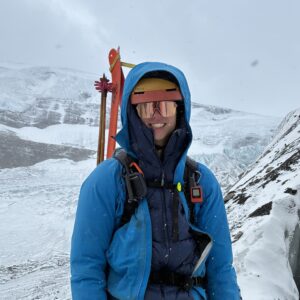
Selection of Current Research Projects
Communication of Uncertainty in Public Avalanche Forecasts
Uncertainty is a major factor in avalanche forecasting and decision-making, yet it has received remarkably little attention in research. The objective of this project is to increase awareness and comprehension of uncertainty’s role in public avalanche forecasts.
Avalanche Accidents Database Project and Insights
SFU is collaborating on an Avalanche Canada project to build a centralized, searchable online database of all recorded fatal avalanche accidents in Canada, designed to improve data accessibility, support research, and strengthen public safety and prevention efforts.
Large Scale Automated Avalanche Terrain Mapping
The primary goal of this research project is to develop research methods that can produce low-cost and large-scale avalanche terrain maps to support backcountry recreationists making informed avalanche risk management decisions. These maps can assist with identifying avalanche start zones, runout zones, and classifying the terrain based on the Avalanche Terrain Exposure Scale (ATES) to provide objective and consistent decision support tools.
Research Tools

Click here to check out the standardized background questions we developed for avalanche safety surveys.
Links
Current conditions
Avalanche accidents
- Canada
- United States
- Europe
- Global Overview (compiled by SARP)
Development Collaborations
We are excited to be part of the following international avalanche forecasting development collaborations:
- AvaCollabra
A working group with the goal of fostering collaboration among researchers, software developers, and avalanche forecasters, to advance the development and application of snow cover models for operational avalanche forecasting. - AWSOME framework
An open source software distribution for snow cover modeling. Its goal is to provide a one-click solution to set up a whole range of fully automated snow stratigraphy and stability forecast model chains robust enough to run through the season unsupervised.


Recent Publications
Exploring motivations of winter backcountry recreationists in support of avalanche risk communication
Understanding exposure to avalanche terrain and avalanche information product use of snowshoers and winter hikers: Insights from Mount Seymour Provincial Park, British Columbia, Canada

Clustering simulated snow profiles to form avalanche forecast regions

A quantitative module of avalanche hazard—comparing forecaster assessments of storm and persistent slab avalanche problems with information derived from distributed snowpack simulations